Grow Good. Built with AI
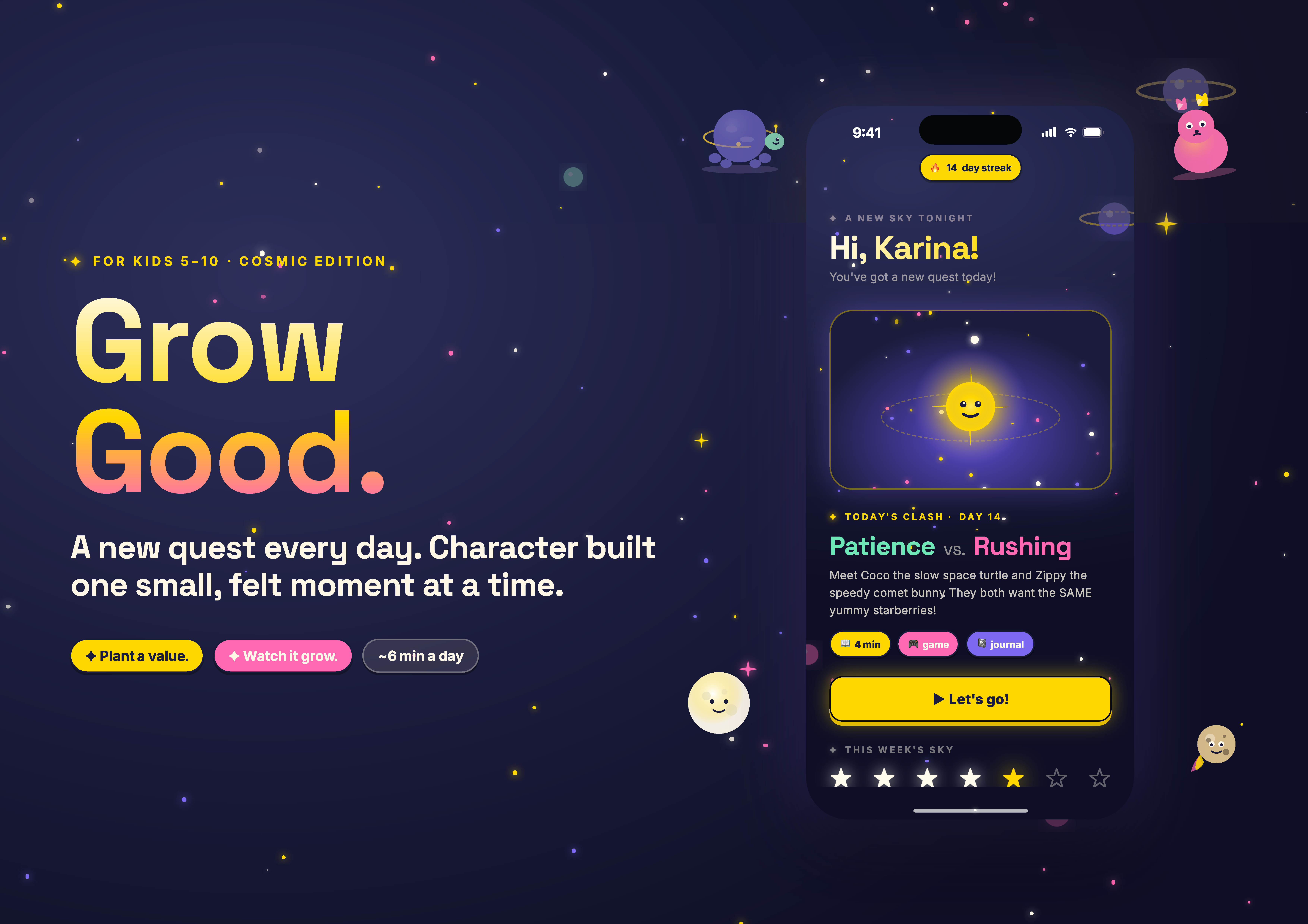
An app created with AI using Claude Design. A daily character-building app for kids ages 5 to 10 that transforms abstract values into playful, interactive quests through story, games, and reflection.
Project
Company: Personal Project
Industry: EdTech, Children's App Design
Scope: Mobile App (iOS), End-to-End Product Design
Market: Families with children ages 5 to 10
Role: Product Designer / App Creator
Focus: UX design, product strategy, interaction design, content design
Impact: Zero-ad, free-forever values app with a 6-minute daily habit loop designed for kids 5-10
Overview
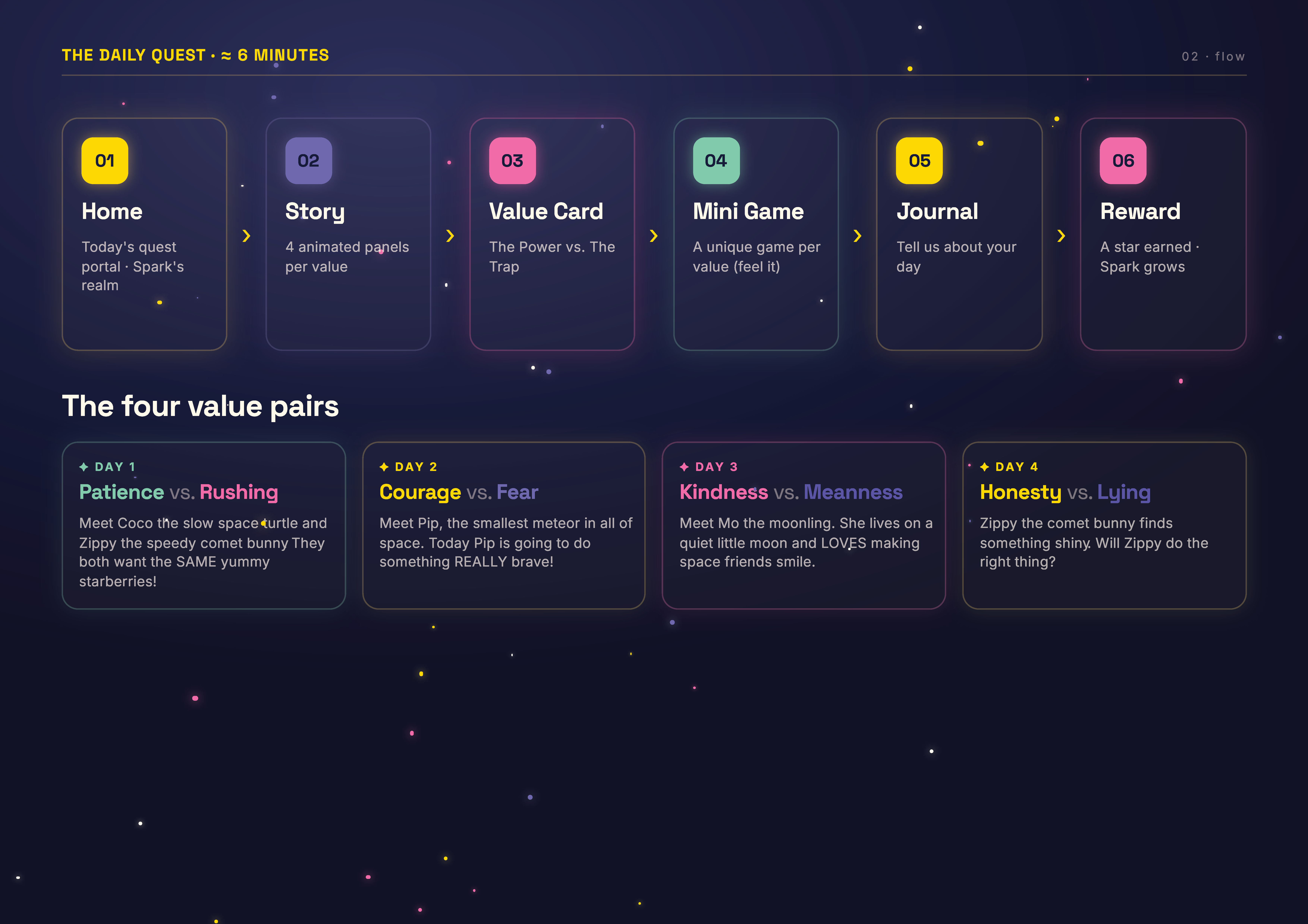
Grow Good is a daily character-building app for kids that pairs one value and its opposite every day, courage and fear, kindness and meanness, patience and rushing, honesty and lying, through animated stories, illustrated value cards, mini-games, and journal prompts.
As the product's creator and designer, I owned the full experience from concept to screen: defining the product strategy, designing the information architecture, crafting the daily quest flow, writing the UX copy, and producing high-fidelity UI across all six screens of the core loop.
The app is built around a single design belief: good character is not taught in a lesson. It grows through daily, felt experience.
The Challenge
Most educational apps for children fall into one of two traps: either gamified distractions dressed up as learning or dry instructional tools that kids abandon within days.
Parents want genuinely formative screen time. Kids want something that feels like play. These needs are often treated as opposites.
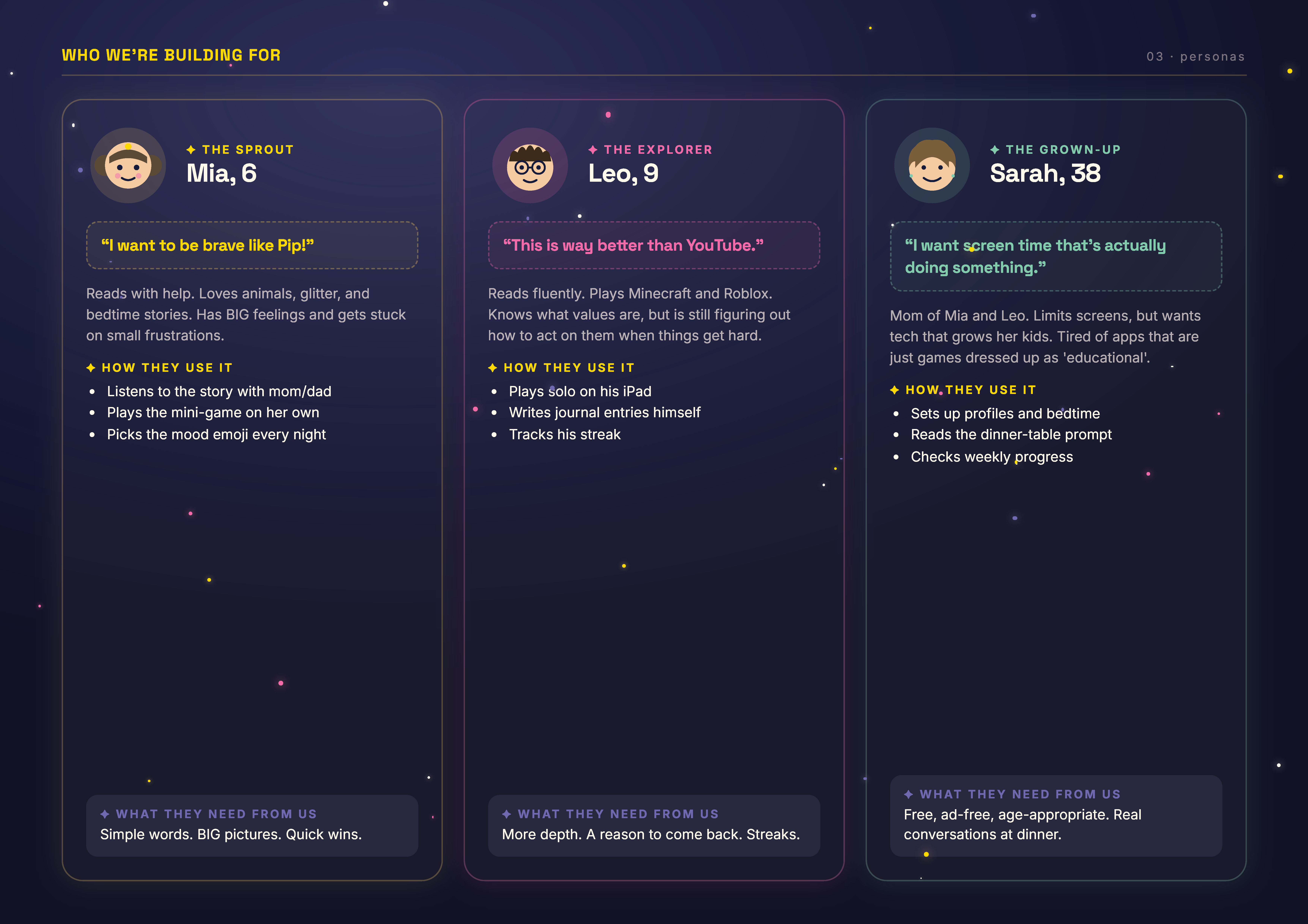
Grow Good had to solve for both simultaneously, across two very different child users: a 6-year-old who reads with help and needs big pictures and quick wins, and a 9-year-old who plays solo, tracks streaks, and wants depth. A third persona, the parent, needed oversight, conversation starters, and confidence that the experience was safe and ad-free.
The design challenge was not just UI. It was behavioral architecture: how do you build a 6-minute daily loop that a child actually wants to return to, that plants a real idea in their mind, and that spills over into family conversation at dinner?
Solution
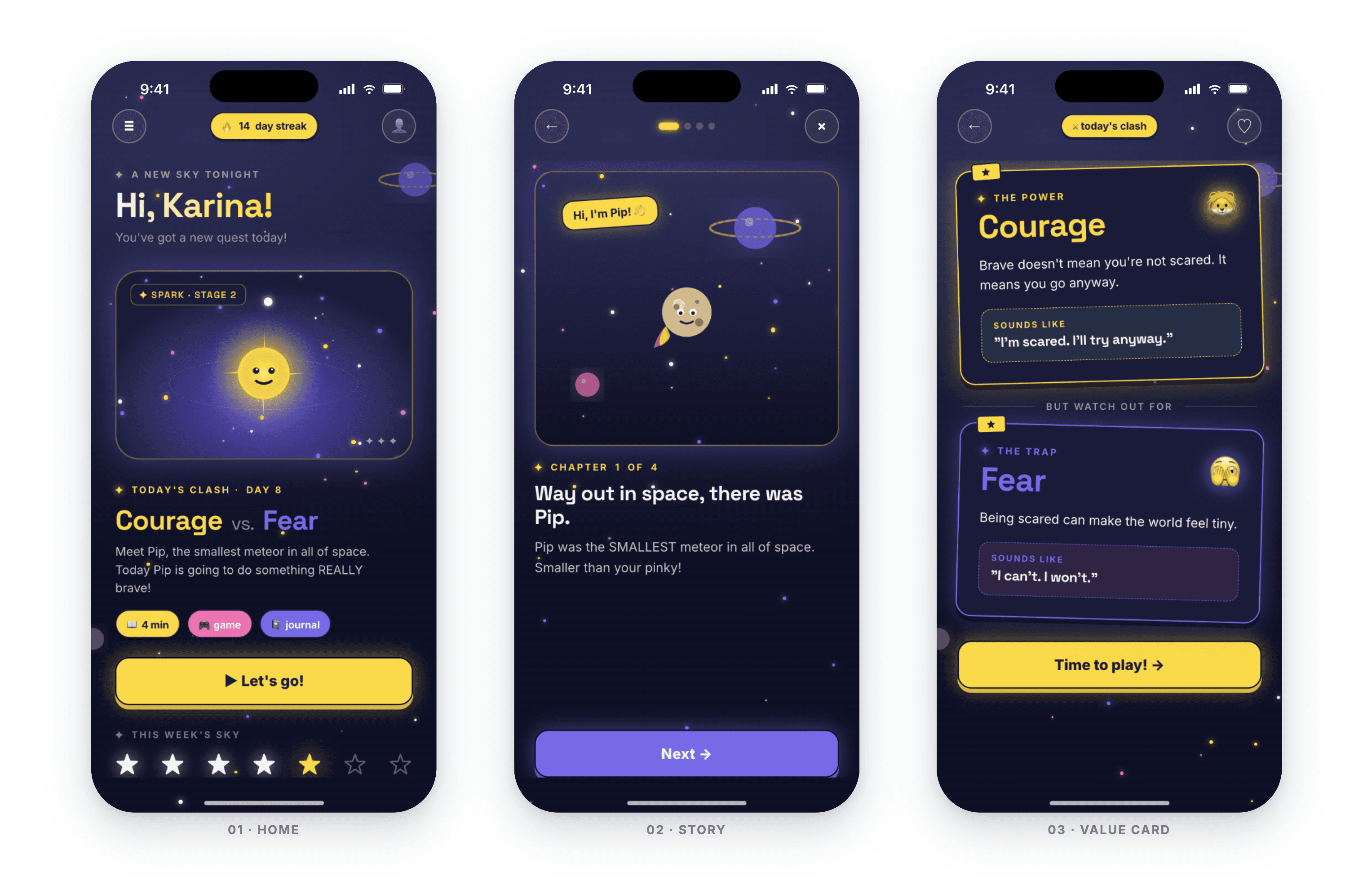
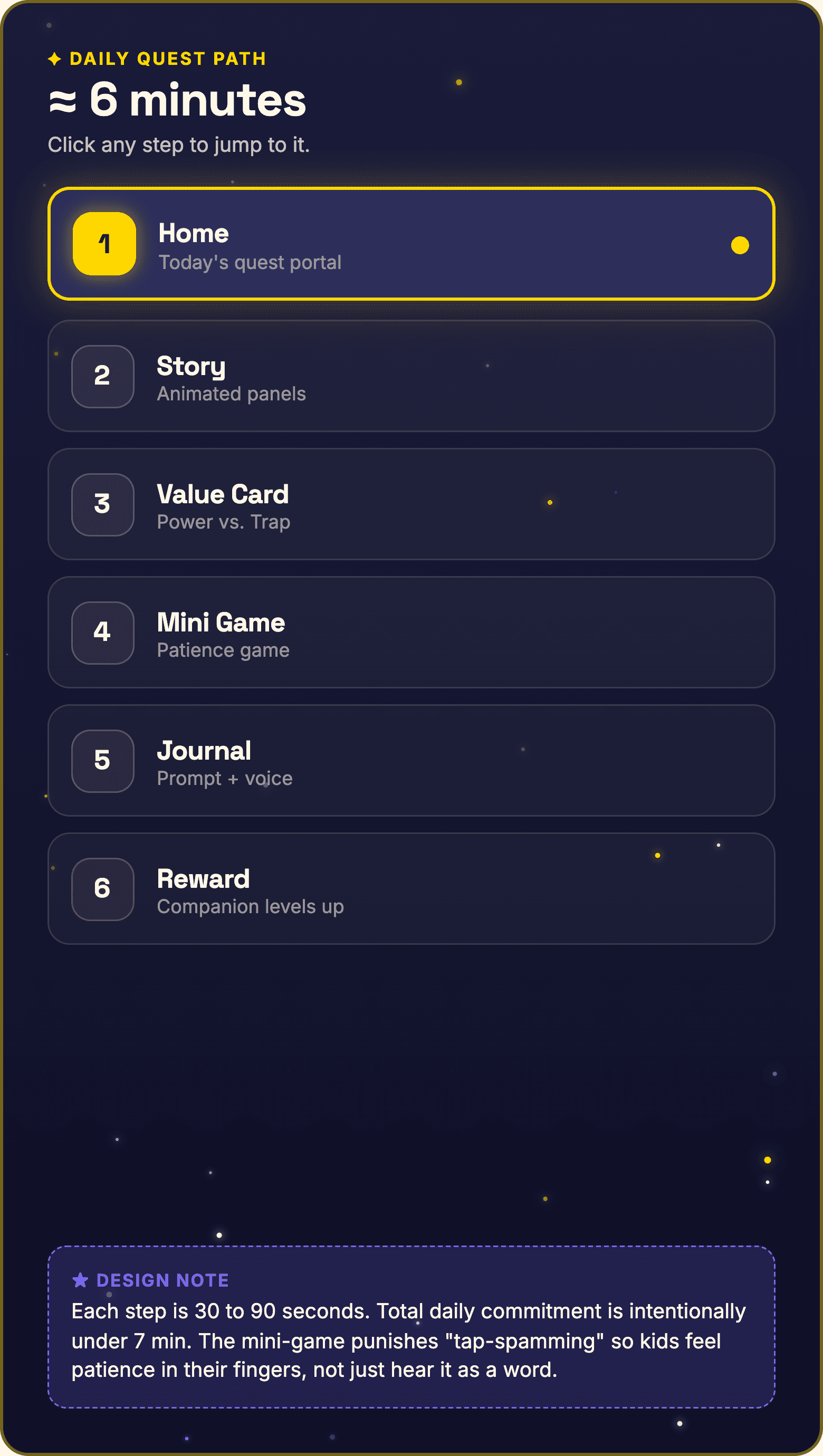
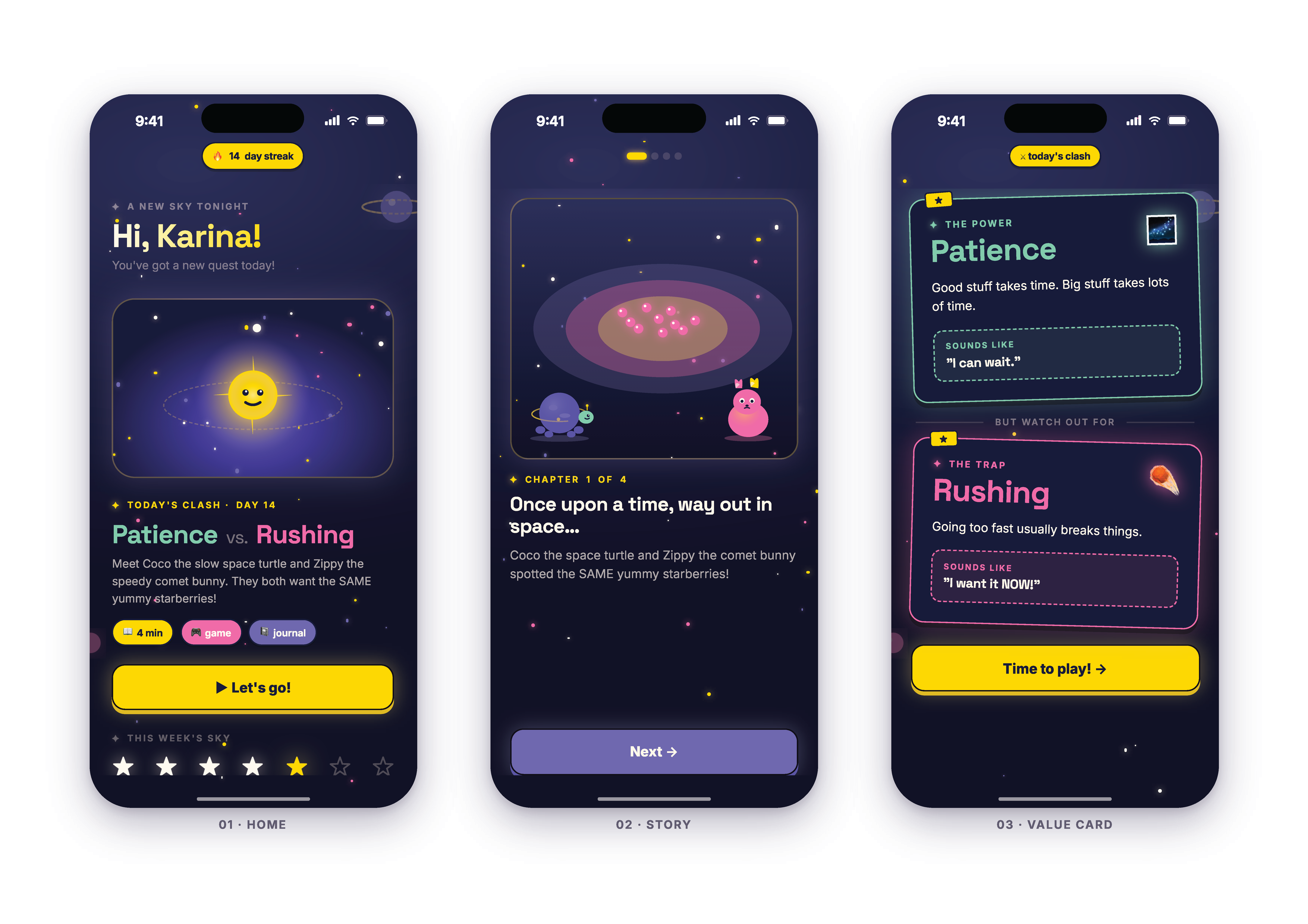
The answer was a structured daily quest that moves through six intentional stages: Home, Story, Value Card, Mini Game, Journal, and Reward.
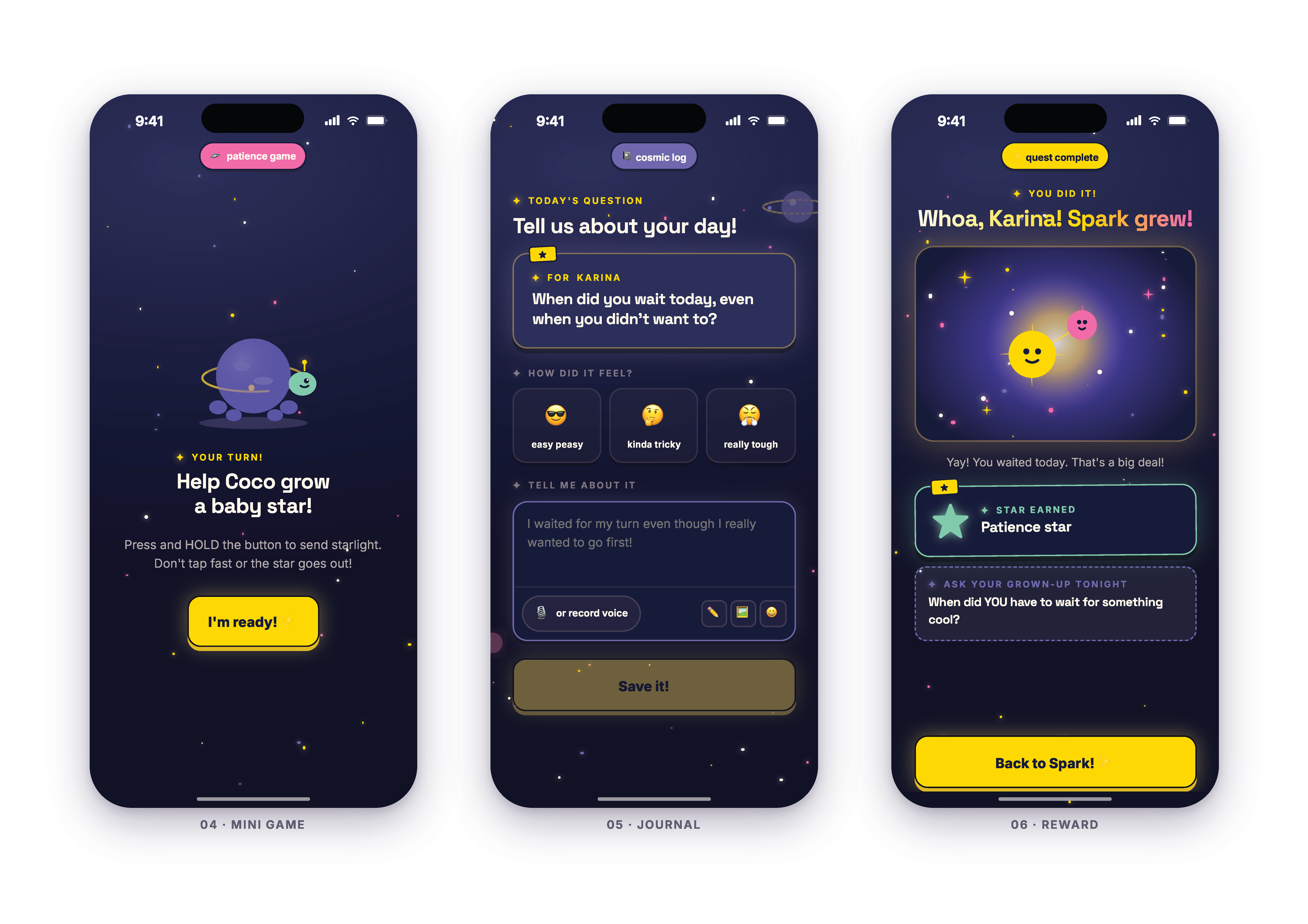
Each stage serves a specific purpose. The animated story makes the value tangible through character. The value card names the power and its trap in language that a child can internalize. The mini-game asks the child to physically enact the value through interaction, for instance, holding a button steadily to grow a star, tapping brave steps into a dark cave, and lighting up sad moonlings. The journal prompt connects the story to the child's real day. And the reward grows Spark, the child's cosmic companion, reinforcing continuity and streaks.
The loop is designed to be completable in approximately 6 minutes, short enough to fit into a bedtime routine, long enough to land.
My Contribution
Using Claude Design (and the right prompts), I designed (vibe coded) the complete product from the ground up, including:
Product strategy and concept definition
User research synthesis across three personas (The Sprout, The Explorer, The Grown-Up)
Information architecture and daily quest flow design
High-fidelity UI across all six screens of the core loop, designed for distinct value days
UX copy for all in-app text, including story panels, value cards, journal prompts, reward messages, and grown-up conversation starters
Mini-game interaction design, with a unique mechanic per value that lets kids physically feel the concept
Visual design system: dark cosmic aesthetic, character design direction, color language for values vs. traps
Parent-facing UX: profile setup, weekly progress, dinner-table prompts (still in progress)
Key Design Approach
Rather than designing isolated screens, I built a consistent behavioral loop that scales across all values without losing its sense of freshness.
This included:
Establishing a value pair structure (The Power vs. The Trap) that creates moral contrast without moralizing
Designing mini-games where the mechanic is the metaphor: patience requires physically holding, not tapping; bravery requires continuing to tap through discomfort
Writing all copy in a child's voice: warm, specific, never preachy
Using the journal prompt to bridge the fictional story and the child's real-world experience
Embedding the parent touchpoint at the reward stage, as a conversation starter addressed to the grown-up, not a dashboard feature
Designing dual-age legibility: the same flow works for a 6-year-old with a parent and a 9-year-old alone, because the complexity lives in the journal and streak layers, not in gated content
The cosmic visual language, deep navy backgrounds, glowing characters, and star rewards were deliberately chosen to signal a bedtime ritual, not a school assignment.
Measurable Impact
6-minute daily loop designed to fit within a child's existing bedtime routine, lowering the activation energy for habit formation
Three distinct user needs addressed within a single unified flow, without separate interfaces or modes
One unique mini-game mechanic per value, designed so the interaction teaches without instruction
Complete daily quests designed end-to-end, each with full story content, value card copy, game logic, journal prompts, and reward messaging
Zero ads, zero paywalls: a product constraint that shaped every architectural decision, from streak design to parent engagement
Outcomes
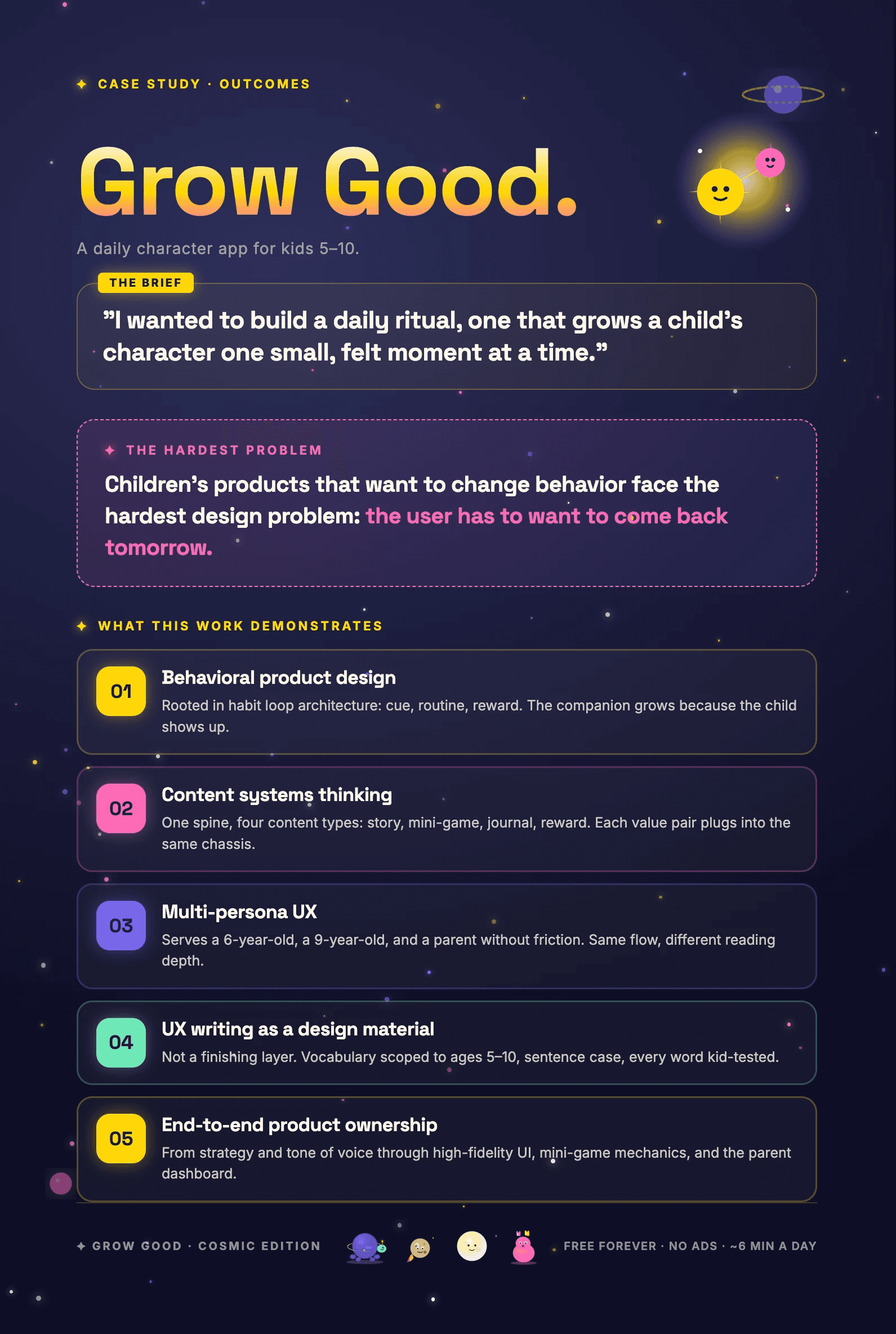
Children's products that want to change behavior face the hardest design problem: the user has to want to come back tomorrow.
Grow Good demonstrates:
Behavioral product design rooted in habit loop architecture
Content systems thinking across story, game, journal, and reward
Multi-persona UX that serves a child, a sibling two years older, and a parent without friction
UX writing as a core design material, not a finishing layer
End-to-end product ownership from strategy through high-fidelity UI
I wanted to build a daily ritual, one that grows a child's character one small, felt moment at a time.